

EDITOR’S NOTE: If you’re looking for a quick way to learn the basics of photography take a peek at our popular cheat sheets: The Snap Cards. If you missed out on your set last time, they’re available again and on-sale right now.
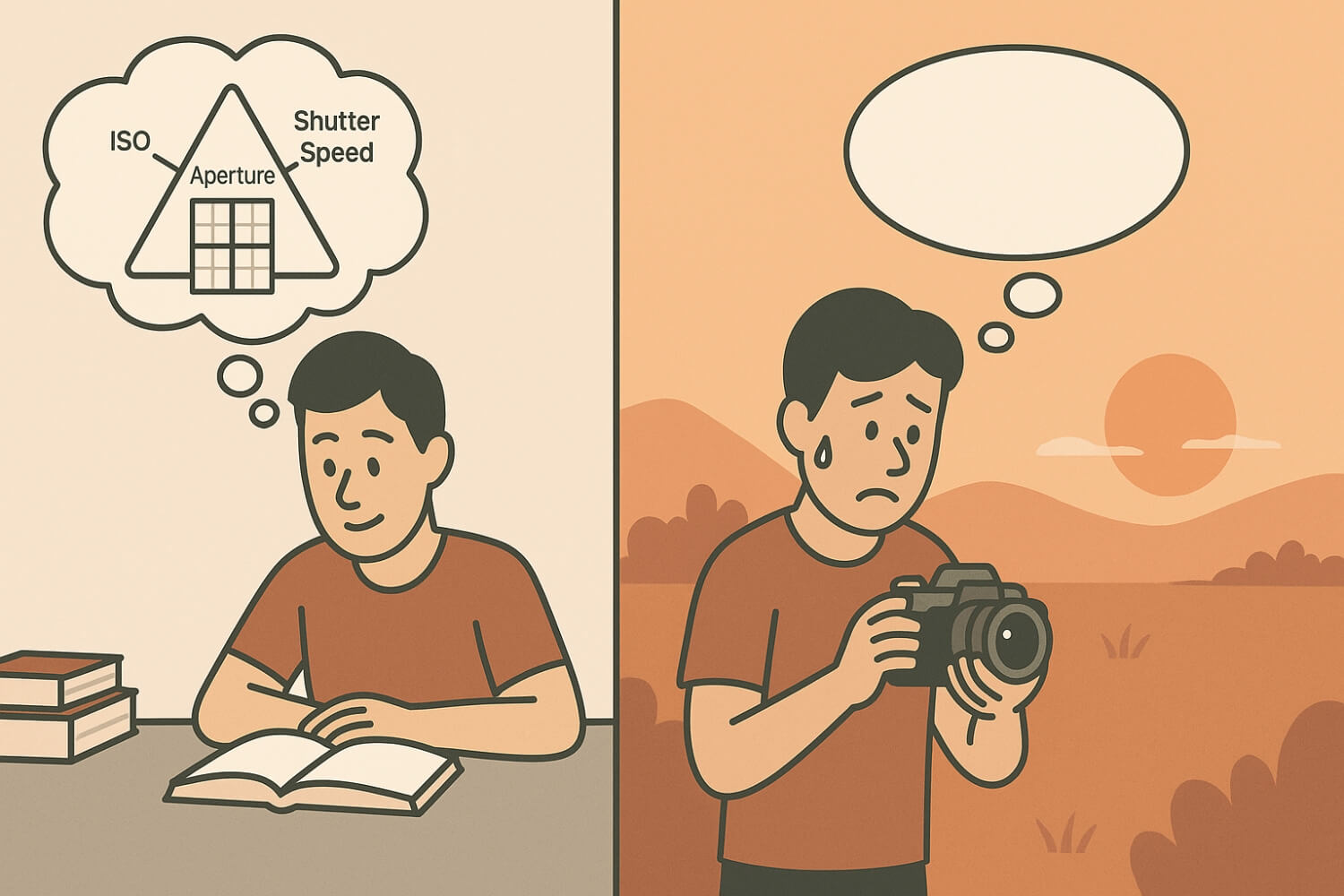
Knowing the theory is easy… remembering it in the field is the real challenge.
There’s a paradox at the heart of learning. We spend hours reading, studying, or watching tutorials, only to forget all of it, the exact moment we need to put it into action.
Ask a new photographer to explain the “exposure triangle,” and they’ll likely get it right. Ask the same person to use it when the light is shifting, and their confidence evaporates.
This isn’t a photography problem. It’s a human problem. Psychologists have known for more than a century that we forget most information quickly if it isn’t reinforced at the right time. Hermann Ebbinghaus called it the forgetting curve.
The implication is sobering: knowledge alone is not enough.
Knowledge vs. Cues
Think of the last time you tried to recall someone’s name. The harder you forced it, the further away it seemed. Then suddenly, when you were least expecting it, the memory surfaced with ease.
Why?
Because memory isn’t a warehouse where facts sit neatly on shelves. It’s more like a spider web — fragments waiting for the right thread to pull them back into awareness. In psychology, these threads are called cues.
In photography, the difference between “I know what aperture does” and “I can choose the right aperture setting” often comes down to whether you have the right cue available in the moment.
It’s not about memorizing it all – just recalling the right cue when it’s time to press the shutter.
The Field is Different from the Classroom
A classroom – or a YouTube tutorial – is a low-stakes environment. You’re sitting still, you can pause or rewind, and no fleeting sunset is demanding a decision. Out in the world, it’s different. The light is shifting. The subject is moving. You have seconds to act.
It’s in these high-pressure, real-world contexts that most of our theoretical knowledge crumbles. The mind blanks. Settings are forgotten. We shoot on “auto” and hope for the best.
The problem isn’t ignorance. It’s translation. We can’t transfer abstract learning into embodied practice without help.
When the light’s fading, theory isn’t enough – you’ve got to act… fast.
Tools as Thinking Partners
Humans have always used external tools to offload cognitive strain. Writing itself was once seen as a “cheat sheet” for memory. The abacus made calculation faster and more reliable. The checklist, beloved by pilots and surgeons, reduces catastrophic error in high-stakes environments.
What all these tools share is the same principle: they transform abstract knowledge into simple, repeatable cues at the exact moment of need.
Photography, oddly, has lagged behind. We’ve been taught to believe that skill means storing all the rules and settings in our heads. But what if skill isn’t about memorization? What if it’s about creating the right environment for memory to succeed?
Sometimes the smartest thing… is to take the thinking out of your head.
Cueing Creativity
One of the most liberating ideas in psychology is that creativity is not pure invention. It’s often the recombination of ideas triggered by cues. A phrase sparks a poem. A melody sparks a memory. A shape sparks a photograph.
The right cue at the right moment unlocks creativity. It gives your brain the foothold it needs to climb.
For photographers, this might mean remembering to change perspective, to look for leading lines, to slow down the shutter for motion blur. Each one is small, almost trivial. But strung together at the right moment, they can transform an image.

Big creative leaps often start with a tiny cue.
A Modern Solution
This is where something like Snap Cards™ fits in. They aren’t another textbook, and they’re not meant to replace practice. They’re cues — distilled, portable, and practical.
Instead of saying, “Remember everything about taking photos at night”, you have a single card that says, “Here are the 3 settings to start with.”
Instead of carrying a 300-page manual, you carry a handful of visual reminders that nudge you into action.
The effect is disproportionate. Because you don’t just know the concept — you apply it, at the precise moment it matters.
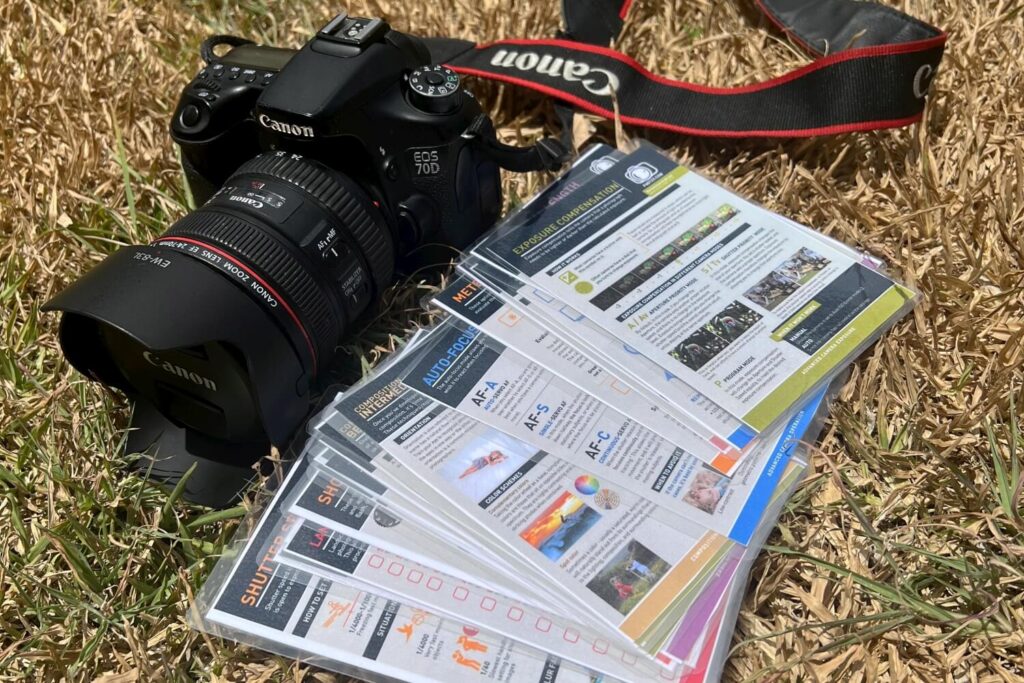
Not more information – just the right info at the right moment. Snap Cards →
The Larger Lesson
We live in an age drowning in information. The challenge is no longer access, but retention and application.
The smarter strategy isn’t to memorize more, but to design better cues.
That’s true in photography, but it’s also true in writing, in business, in relationships. We all need reminders that cut through noise and bring the right idea back into focus.
Snap Cards are one example of this principle in action: knowledge transformed into cue, theory transformed into practice.

It’s not about how much you know. It’s about how fast you can use it. Snap Cards can help with that.
Closing Thought
The most important question isn’t, “What do I know?”
It’s, “Can I act on what I know, in the moment I need it?”
If you’re a photographer, one simple way to bridge that gap is with Snap Cards™. You don’t need more more information. You need better cues.
And sometimes, that’s all it takes to turn knowledge into skill.

I’ve got something special for you on the next page…
If you would like to take your learning a step further and get better at photography by way of a training method that you can take with you anywhere, take a look at Photzy’s Snap Cards™: 44 printable photography lessons that serve as a ‘training boot camp’ in your camera bag.
If you missed out on your set last time. They’re available again, and on sale right now. Plus it includes two bonus video tutorials for free.
Click below now, to read about it on the next page…
NEXT PAGE