

Photographing children is both fun and rewarding. It is also quite challenging because the little buggers have their own minds!
I photographed children professionally and almost exclusively for fifteen years and learned a thing or two about achieving the best results in child photography.
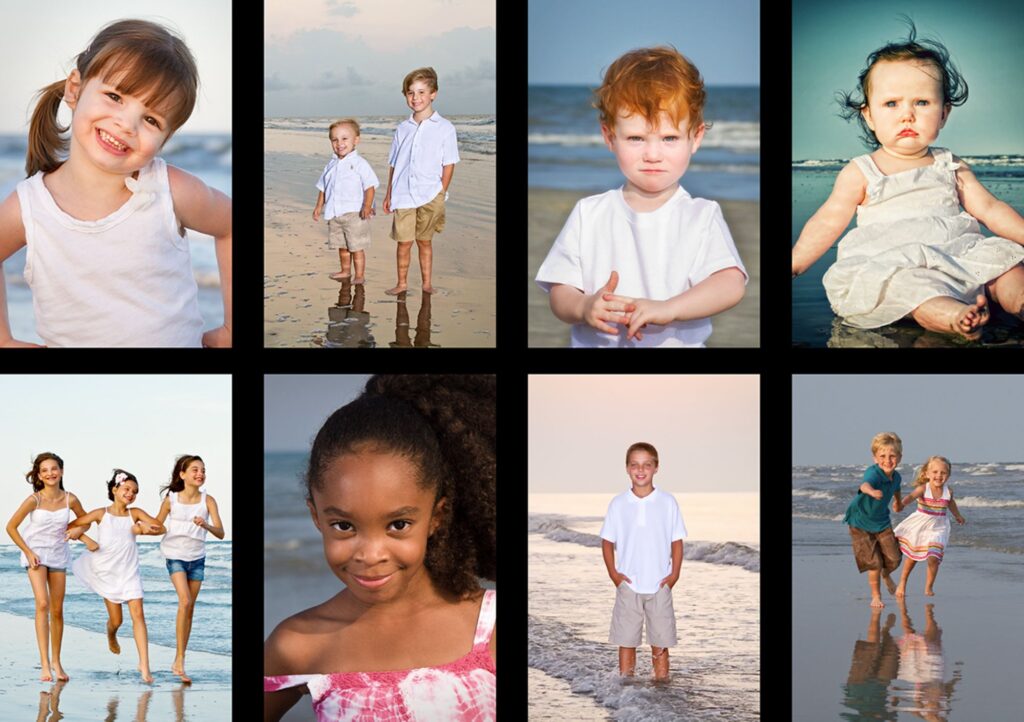
These are a few of my photos from my professional time at a beach portrait studio. We photographed families but placed a heavy focus on the children as that is what sold the big canvas prints. Photographs by Kent DuFault
I discovered nine essential working tips for getting the best out of children in front of the camera.
Here’s what we will discuss:
- Make it fun
- Explore the angles and environment
- Try alternative media
- Choose the time of day carefully
- Become invisible and show relationships
- Get down to their level
- Use anticipation and timing
- Be alert to interesting details or activity
- Think outside the box when dealing with an uncooperative subject
Making It Fun
This one is tricky because what one person finds fun, another may not. This necessary component of child photography can vary with the child’s age.

Photograph by Kent DuFault
The boy in the image above was around fourteen years old. He said he wanted to jump and make a hand gesture. (He had a name for it. I don’t remember what it was.)
I said, “Let’s do it.”
Unknown to him, I set up my camera angle to capture another family member in the surf, which adds to the story and makes the photo more compelling to the parents.
Photograph by Kent DuFault
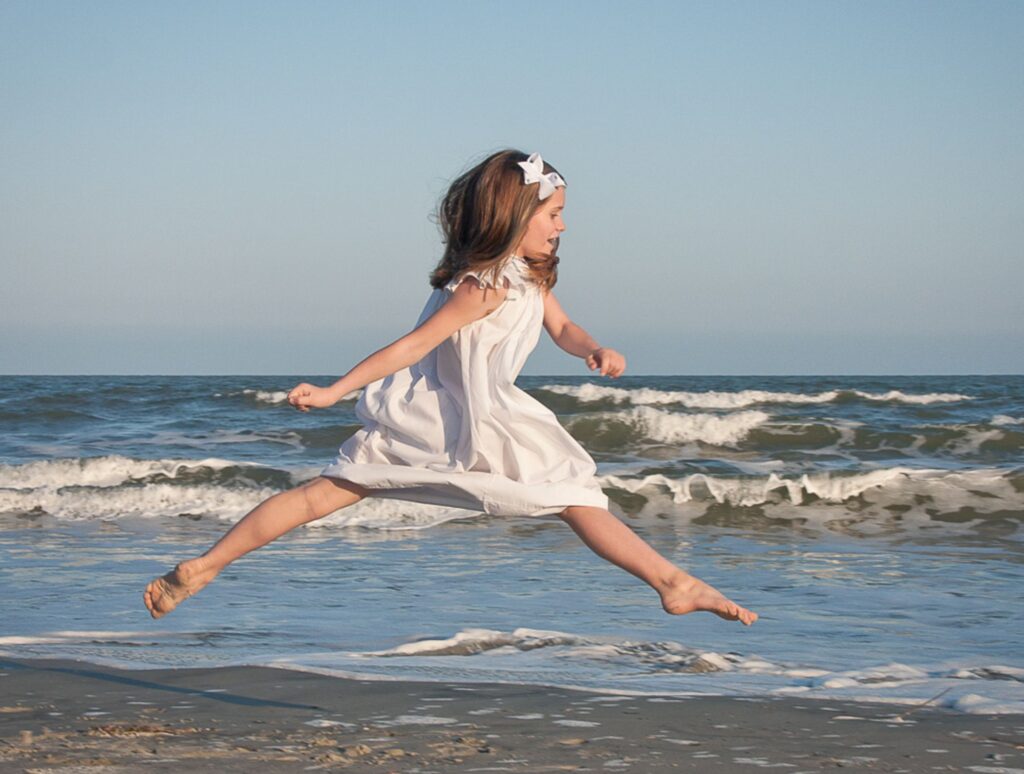
The child in the image above was cooperative but not overly demonstrative in expression. She was an introvert and said she didn’t particularly like to smile for pictures.
Through conversation, I found out that she was a dancer and had been involved in dance from the time she could walk.
I suggested that we set up the camera and she could perform some dance moves for me. At that point, she would have let me take pictures of her all day.
Explore the Angles and Environment
I often create candid photography while I’m traveling. One of my favorite subjects is children.
Photograph by Kent DuFault
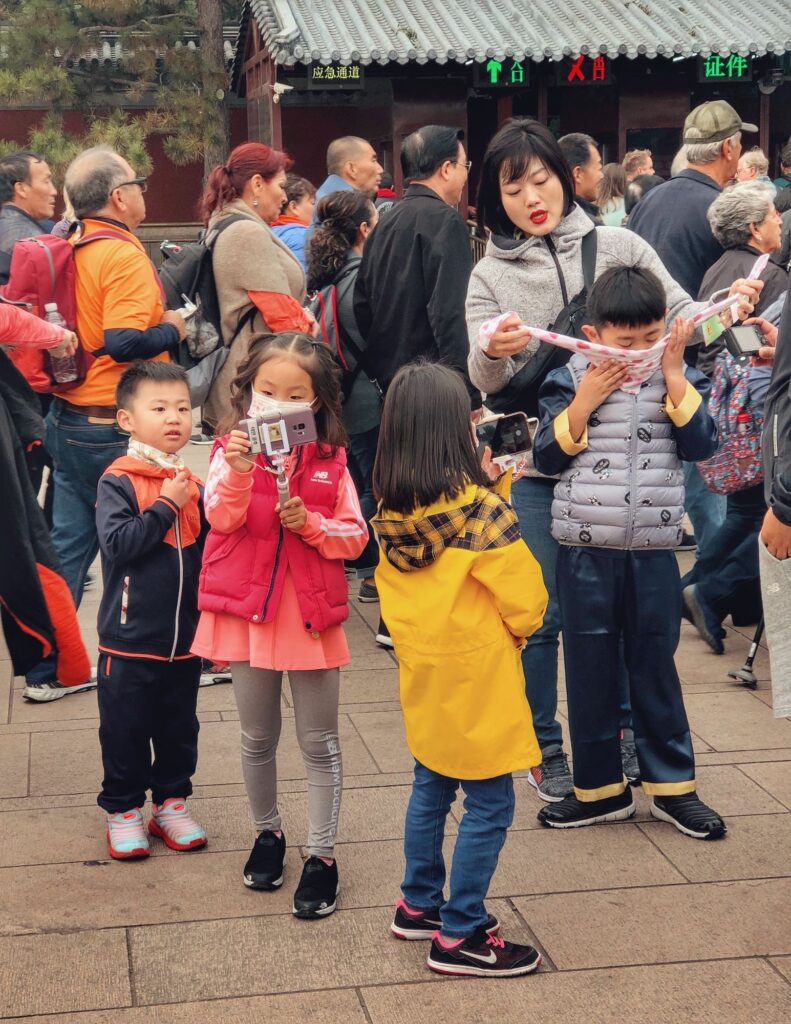
I was on vacation in China when I saw the scene depicted here. This mother was with her four children. We were all waiting to be let into a national monument. This was pre-pandemic, so I found it interesting that she was masking up her children.
The image above was my first shot. However, an interesting interaction was going on between the boy and his sister with the selfie stick. The background was also quite busy and did not add to the story.
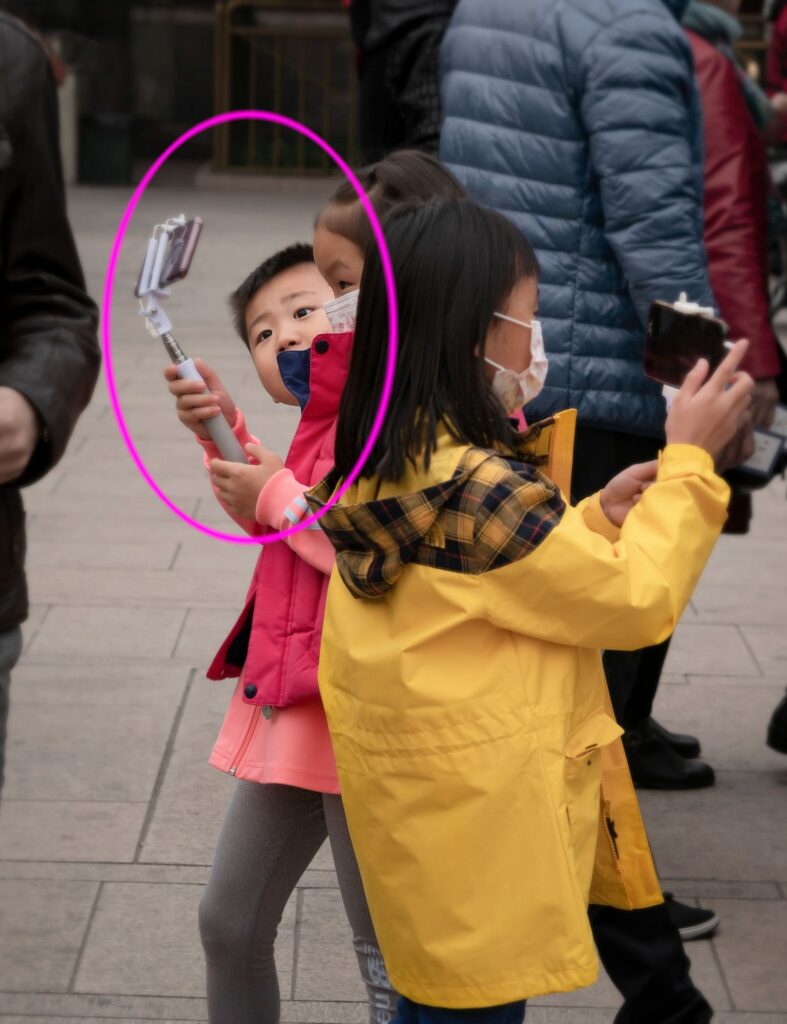
Photograph by Kent DuFault
By recognizing the environment and identifying my proper subject, I moved the camera to a better angle.
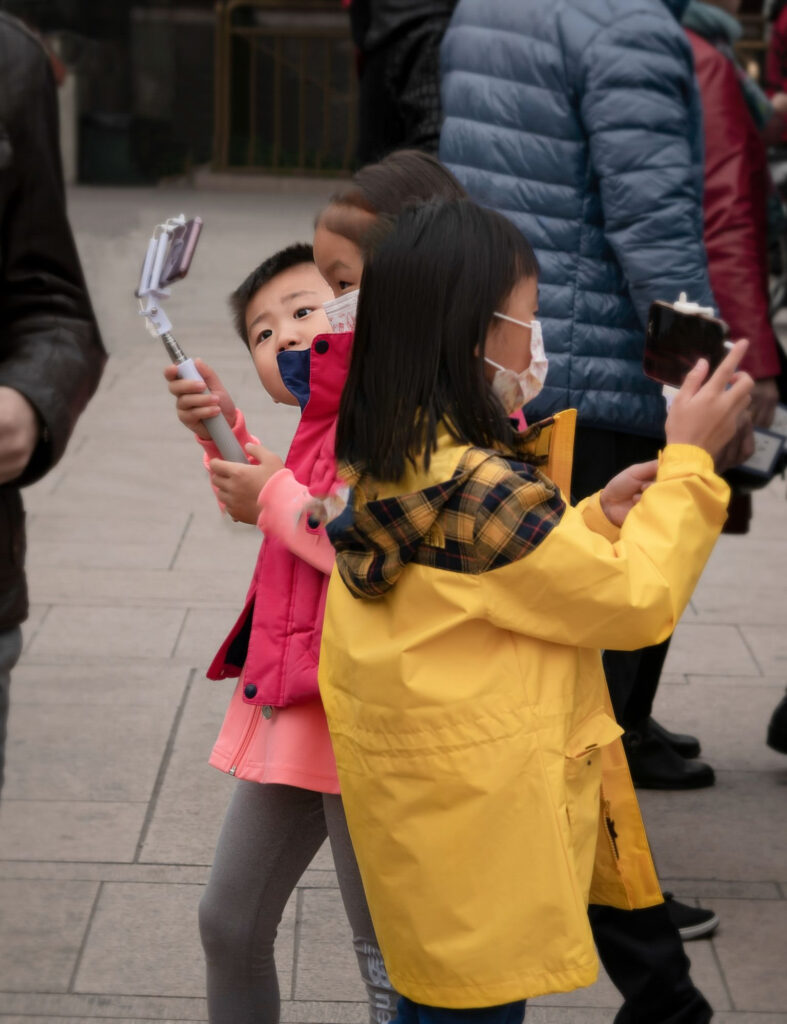
Photograph by Kent DuFault
This version is much more exciting and has a better storytelling value than my first shot.
Try Alternative Media

Photograph by Kent DuFault
I was trying to capture a nice group portrait of these three siblings. There was some in-fighting going on, especially between the brothers with their older sister.
To redirect their energy, I told them I would take some Polaroid pictures, and if they cooperated, they could each select one that was their favorite to take home.
That did the trick, and even after I was done with the Polaroid, they continued to cooperate.
Choose the Time of Day Carefully
Ah, yes, the time of day. We, photographers, are always keenly aware of the time of day for the best light. But when it comes to photographing children, there are other considerations.

Photograph by Kent DuFault
The Golden Hour, morning or evening, can work well if it fits the child’s biorhythm. Most children generally seem more in tune with the process in the evening rather than in the morning. But you never know. The image on the previous page was evening, and the image above was morning.
When considering the time, also factor in the weather. In the evening is easier to predict if the weather will cooperate that day. In the morning, it is a roll of the dice.
When considering the time, also factor in the weather. The evening is easier to predict if the weather will cooperate that day.
Also, evenings tend to be hotter, buggier, and windier, but mornings are often dripping with humidity, which can make everyone miserable. Mornings also tend to be foggier, while evenings can be prone to quick thunderstorms.

Photograph by Kent DuFault
If you have a decent location with some overhead cover, late morning often works with children, especially the younger ones. Pick a time after breakfast with an hour or so before lunchtime. After lunch is the worst time of the day. I always avoid any early afternoon bookings.
Become Invisible and Show Relationships
Photograph by Kent DuFault
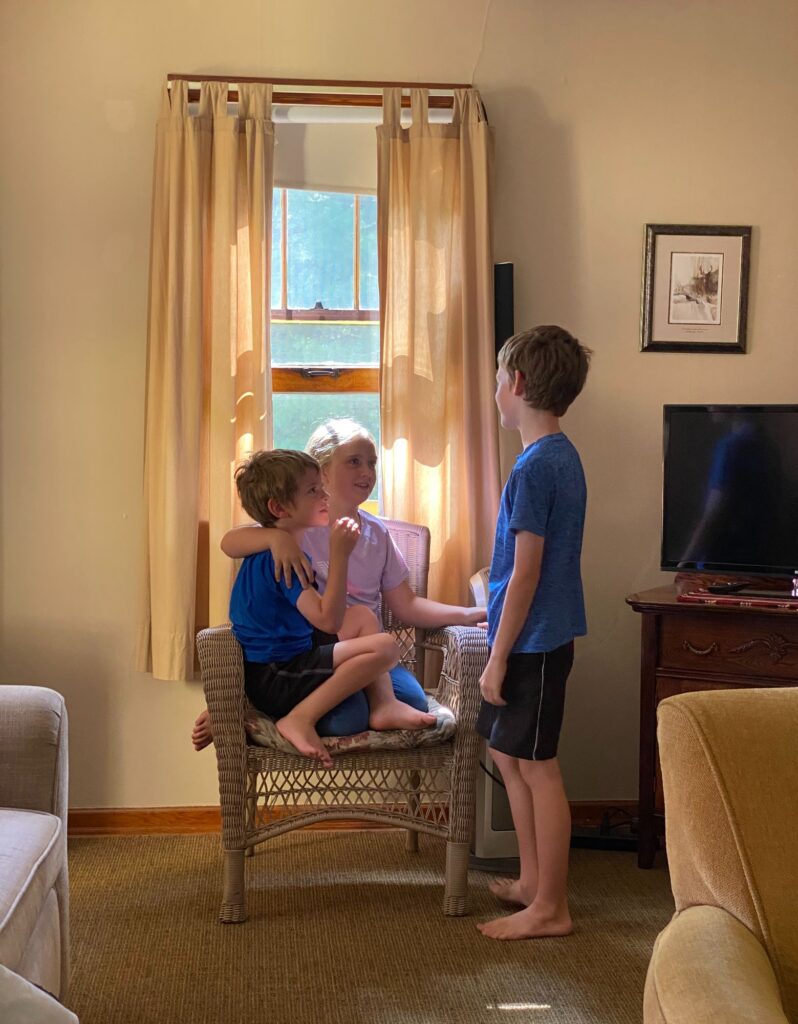
Remember the children depicted in the Polaroid photo earlier? After that tactic broke the ice, I wanted to switch to my regular digital camera.
I asked them to sit tight while I got ready. I then became invisible and waited for them to interact, showing a relationship.
Photograph by Kent DuFault
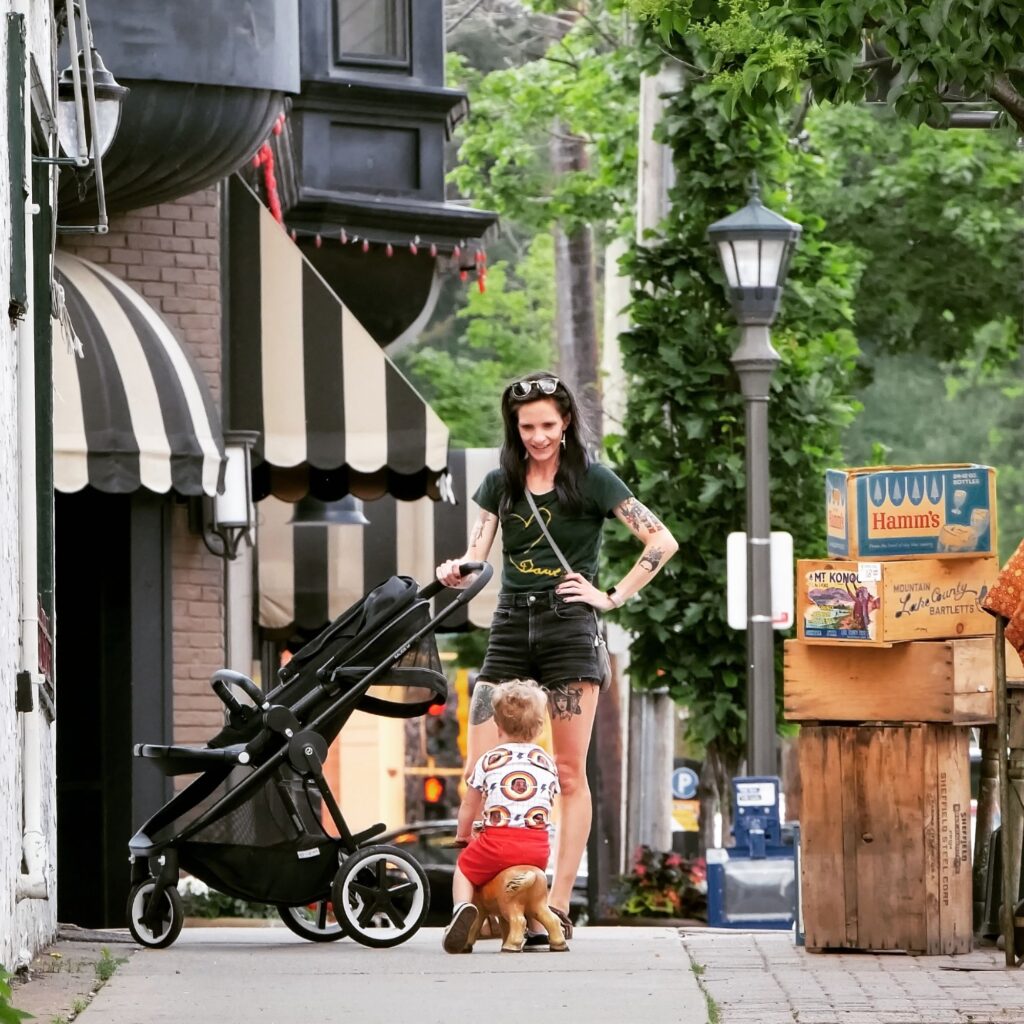
I saw this young mother with her child standing outside an antique store. They were having a wonderful time interacting.
I was afraid I would ruin the moment if I got too close. So to remain invisible, I switched to a telephoto lens and photographed them from about half a city block away.
Get To Their Level

Photograph by Kent DuFault
When photographing people, it rarely looks good when the camera is looking down on them (unless there is a viable reason). This statement is particularly true with children.
When you get down to their level, it has the effect of equaling the playing field. You become one of them, especially if you are playful and happy in your attitude.
When photographing people, it rarely looks good when the camera is looking down on them (unless there is a viable reason). This statement is particularly true with children.
When you get down to their level, children will relax and do things they simply won’t when you look down on them. It may be something minor, like the boy leaning forward in the image above. These subtleties in body language and expression elevate a child’s picture from okay to memorable.

Photograph by Kent DuFault
The child pictured in the image above was stunningly beautiful. By getting down to her level, I memorably captured that beauty because of her expression. She was quite coy and playful.
Use Anticipation and Timing
Anticipation and timing are critical skills for any photographer who wishes to photograph people or animals.
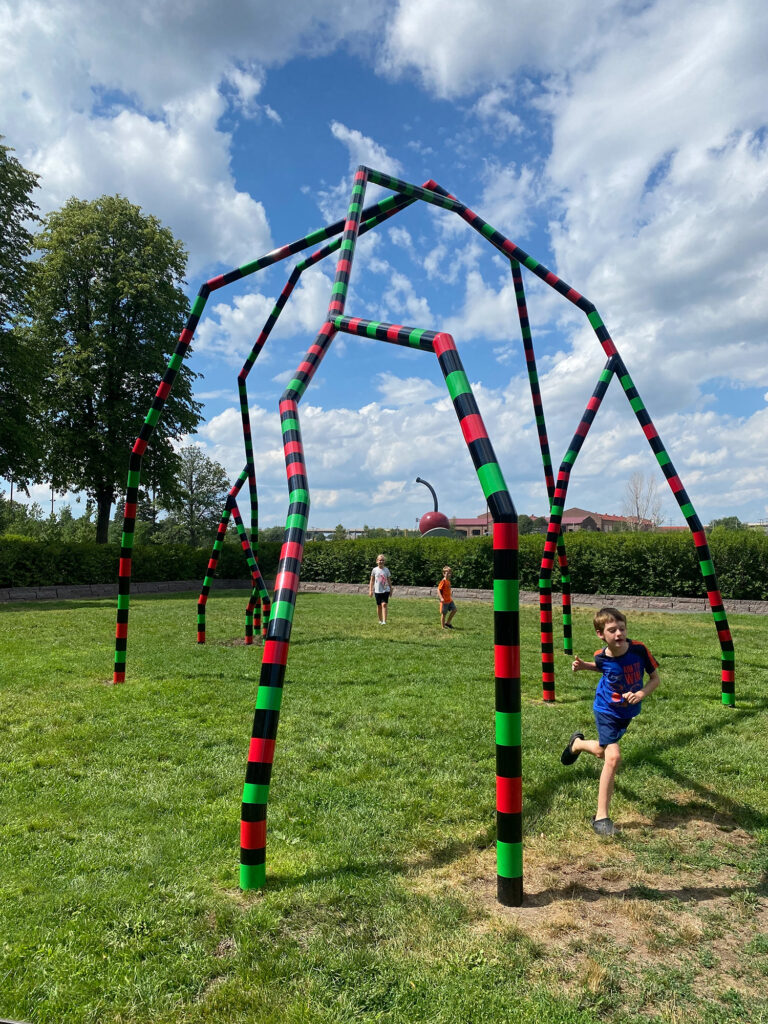
Photograph by Kent DuFault
The image above was taken at the critically acclaimed sculpture garden at the Walker Art Center in Minneapolis, Minnesota.
The family was visiting from Florida. The garden had special significance to the parent, and his children were excited to see it.
The cherry in the background is a recognized landmark. I used many of the tips discussed in this guide to capture a range of photos of these children as they explored the area. Image 014 was one of the dad’s favorites.
Anticipation and timing are critical skills for any photographer that wishes to photograph people or animals.
Let’s talk for a minute about composition. Do you think the running boy in the foreground creates a frame break? I don’t, and here is why.
Close your eyes and wait five seconds. Open them while looking at this photo. Where do your eyes come to rest? Mine come to rest on the children and the cherry in the background. The statue forms a dominant frame around them, pushing the eyes inward. The running boy is a focal point that adds depth, interest, and story. The photograph would not be as strong without him. Since he is not the subject, he doesn’t create a frame break.

Photograph by Kent DuFault
While on vacation in Italy, I noticed this young girl coming down the steps, then turning around, and going back up.
In anticipation that she might return down the stairs, I got my camera ready, and sure enough, there she came.
Does the image above create a frame break? By definition, it does. However, this was intentional. I wanted to show as much of the stone arch above her as possible. By doing so, it helped to provide a sense of scale and location to the scene. I could have zoomed my lens into a tight shot of just her. That framing would have lost the storytelling element as well as the perspective.
Be Alert to Interesting Details or Activity

Photograph by Kent DuFault
I was on vacation with my family in the Bahamas. I was sitting in a chair reading a book when my son ran up and began talking to me. I looked up, immediately picked up my camera, and photographed him.
You’ve probably seen numerous other photos that appear similar to this one, but here is an interesting tidbit about this picture. When I took it (around 1993), no one had created something similar and published it in a national forum. Mine was the first, and the Hilton Hotel chain paid me $4000.00 to use it in a national ad campaign. This photo paid for our vacation!

Photograph by Kent DuFault
I was trying to take pictures of my nephew eating cookies. He was in a mood that day and not being particularly cooperative.
I was about to give up when the dog came out of the shadows and attempted to snatch a cookie. That moment of anticipation and timing added the storytelling element that I needed to accompany his disenchanted expression.
Think Outside the Box When Dealing With an Uncooperative Subject
Photograph by Kent DuFault
Children operate their clocks. They rarely sit still, especially toddlers.
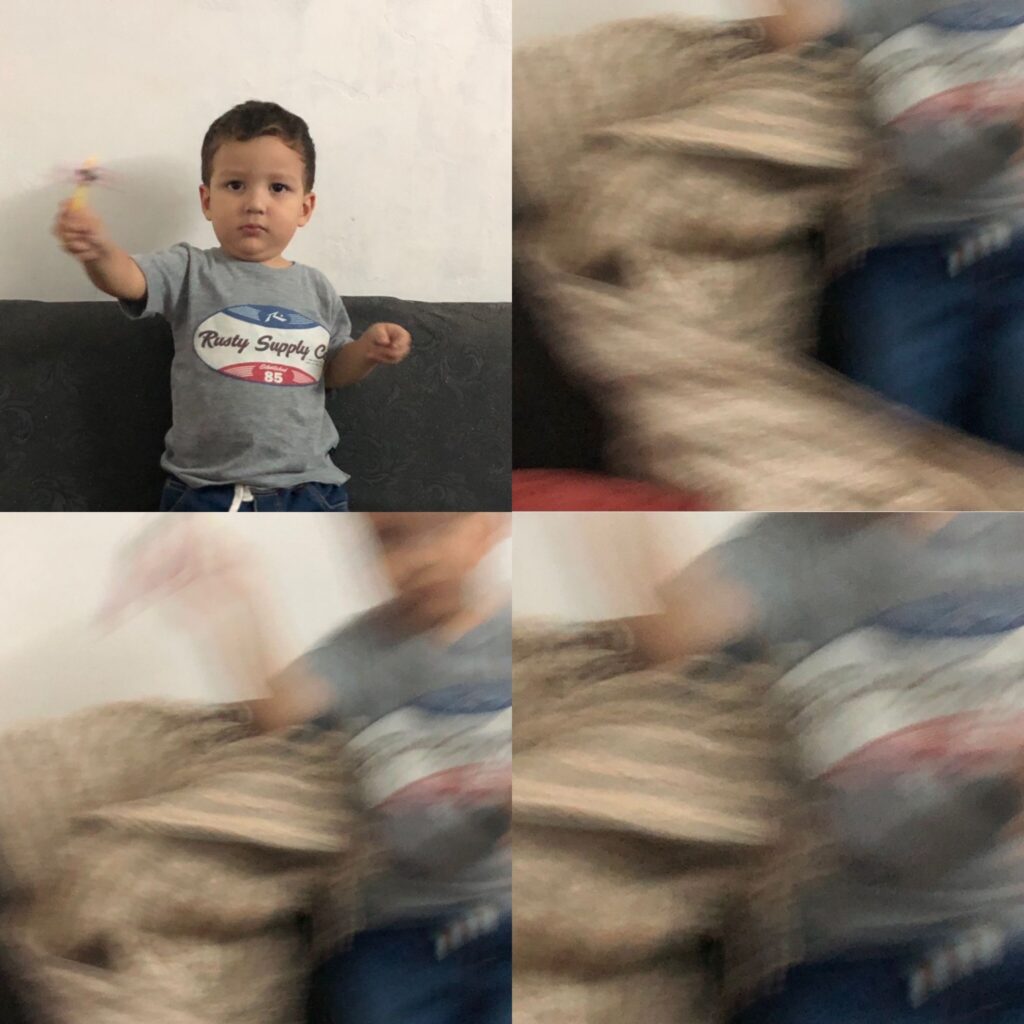
I was attempting to take some photos of my nephew holding a flower. Well, he was a busy boy that day, and virtually every shot was blurred. This was before the days of ultra-high ISO cameras.
I got one shot where his face was sharp. As I was shuffling through the photos, I realized that the movement had an interesting pattern.
I put together this quadriptych and liked it, and so did his mother. A bit of out-of-the-box thinking saved the day!
Photograph by Kent DuFault
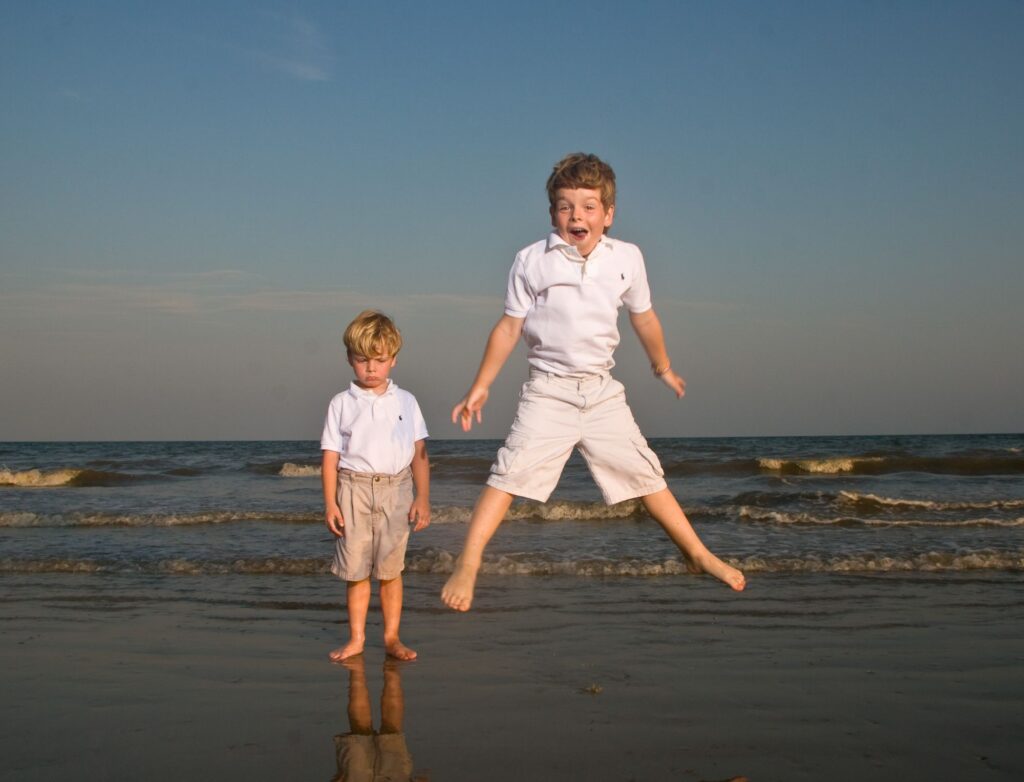
This is unequivocally my favorite uncooperative child portrait. I was hired to photograph these two brothers. As you have probably already guessed, one was into it, and the other wasn’t.
Using the techniques discussed in this guide, I was trying to develop a situation that would work. I asked the boys to start jumping together.
The older brother repeatedly started jumping like a coiled spring while his little brother pouted in the background.
I loved it but wasn’t sure what the parents would think. As it turned out, they loved it too. Their mom said that it perfectly captured their differing personalities. She ended up ordering a gigantic canvas print for their home.